
What I offer teams and organizations
Every program is built from these. How they come together depends on your goals.
Workshops
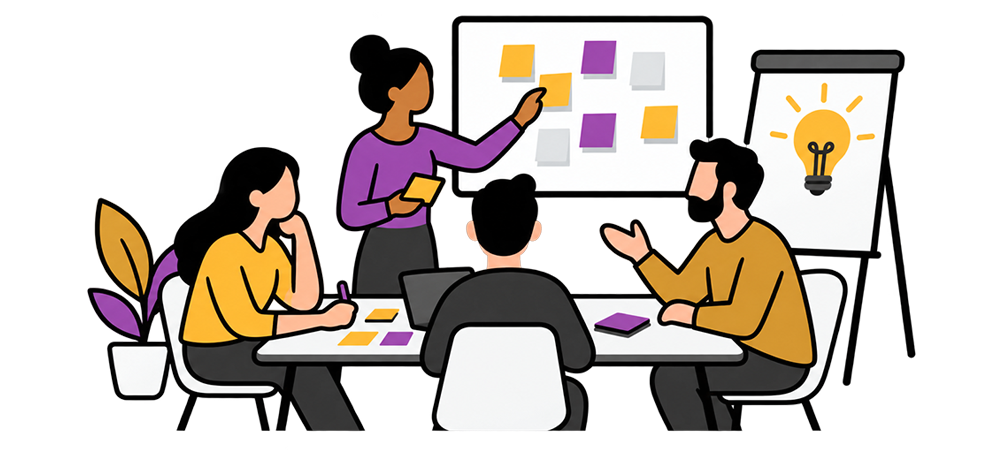
A facilitated session with your team, in person or online. Everyone works from their own results, so the conversation is about the actual people in the room. Two hours, half a day, a full day, or two days, depending on what you want to cover.

Coaching
One-to-one follow-up, usually after a workshop so people arrive already warmed up. Often one session per person. You decide who it's for, whether that's everyone or a selected group.
What makes this different
Three things shape how these sessions run, and what your people are still doing with it afterwards.

Results are a starting point, not a verdict
Nobody gets handed a label and sent on their way. Each person learns to see themselves differently and to name what they actually bring to the team. Their results become a tool they use, not a category they sit in. That's what keeps people genuinely in the room instead of quietly checking out.
Concepts, not a report
Your people learn the thinking underneath the assessment, not just their "five words". So when something comes up that nobody planned for, they still know what to do with it. The session ends. What they know doesn't, and it keeps showing up in how they work.
An investment, not a training
What your people learn here doesn't clock out at 5pm. They carry it into how they see themselves, how they work with the people they love, and how they move through the rest of their lives. These are lessons they keep reusing. When you invest in people like that, they see themselves and their organization differently, and it shows in how they work.
Why leaders bring CliftonStrengths to their teams
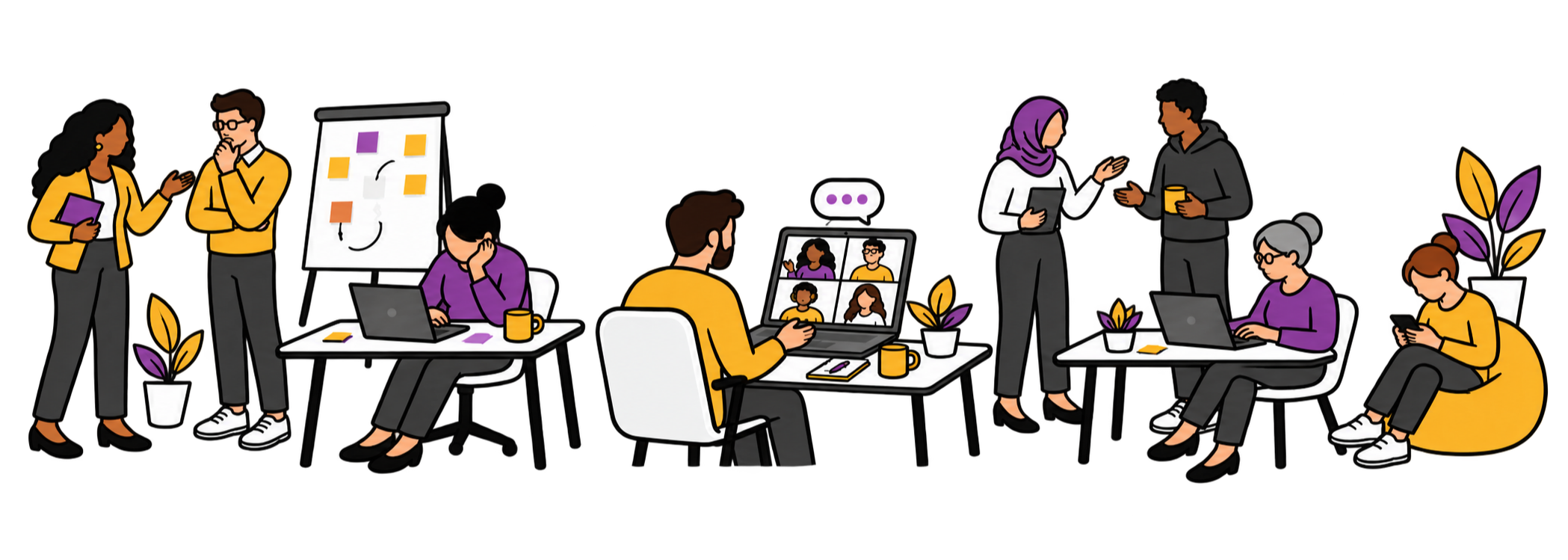
Most leaders come looking for CliftonStrengths specifically. Some still know it as StrengthsFinder®. Before we talk about that, I want to hear what's behind it. What's happening on your team, and who you want them to become. That's the part that shapes what we actually do. A few of the reasons leaders get in touch:
- A team that could work better together. This is the most common one, and it doesn't always mean something is broken. Sometimes a good team just wants to be better. What surprises people is how much of it turns out to be personal: they came for the team and left understanding themselves.
- Development for a small group of key people. Often the leadership layer, or the ones being built toward it. What shifts at that level is how they see individuality, their own and everyone else's. Assumptions about how things ought to be done start to loosen, and the patterns that have been holding them back come into view.
- An organization that wants to grow, and knows it has to look at itself differently first. Growth asks something new of the people already there. This is a way to see what your people are capable of, so you can grow into it with the ones you already have.
- Remote and hybrid teams that don't quite know each other. Distance hides the things that would explain a lot. When you can't read someone across a desk, understanding how they're wired does some of that work instead.
- Departments that keep colliding. Every group has its own priorities and its own way of getting there, and from the outside that can look like resistance. Seeing the Talents in each one shows what each group brings, and often explains what's been feeding the friction all along.
Whatever brings you here, it starts the same way: understanding what your people are actually made of.
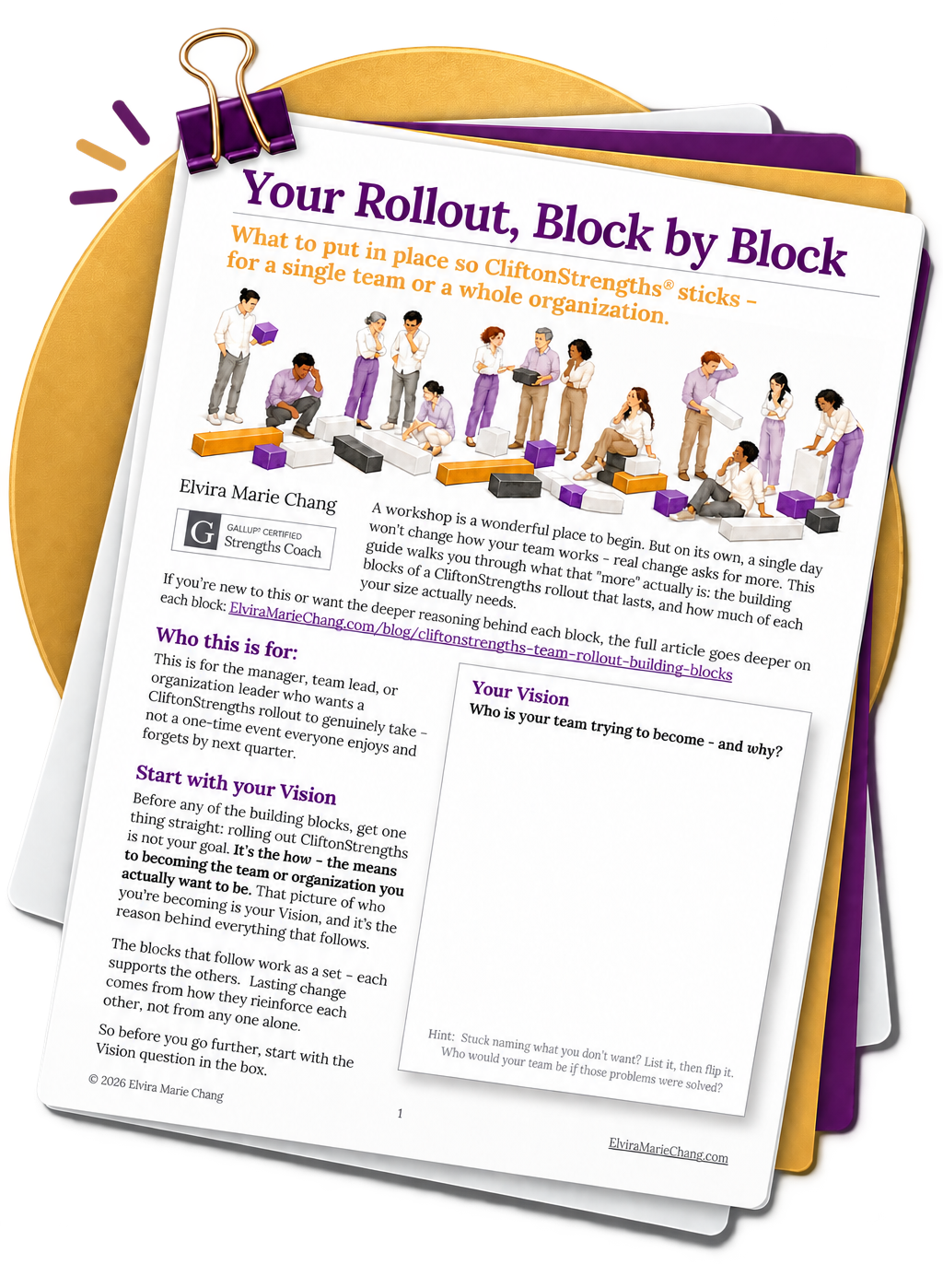
FREE GUIDE
What it takes to make CliftonStrengths stick
A workshop is a good place to begin. On its own, a single day won't change how a team works. This free guide walks through what does: the eight building blocks of a CliftonStrengths rollout that lasts, and how much of each your team's size actually needs.
There's a place to name your Vision first, since that's what everything else serves. Then the blocks themselves, marked for a single team and for a larger organization, because how deliberate you need to be depends on your size. Along with the things worth knowing before you start. The full article behind this guide walks through all eight blocks in detail.
Free. Six pages. You'll also join my email list. Unsubscribe anytime.
Who this works best for
How I work asks something of you. A certain amount of conviction, and a willingness to make room for it. This part is about whether that's how you want to work. Whatever form it takes, here's who tends to get the most from this.
- You know who you want your team to become. Or you're ready to work that out first. Everything else follows from that.
- You already know a workshop on its own won't change how your team works. A day together is a good beginning. What makes it last is the habits you build around it, until using this stops being something you scheduled and becomes how your team operates.
- You believe your people are the point, not the means to it. For some leaders, the numbers come first and people are how you get them. If that's the order, this won't land the way it should. What I'm looking for is the leader who already believes that investing in their people is worth doing, and that the results follow from there. This is for developing the ones you have, never for screening, ranking, or hiring.
- Someone with authority is behind it. And stays behind it when the quarter gets busy. If you're leading a team inside a larger organization, that person can be you, as long as you're the one protecting it whatever else is going on above you.
- You know the return takes time. Time, budget, and attention have to come from somewhere, and there's a stretch where you're putting in more than you're seeing back. That's how investments work. What you're building is who your team becomes, and that keeps paying out long after the spending stops.
And if a one-time event is what you want right now, that's a real thing and there are people who do it well. My focus is on building a foundation for a shift that lasts.
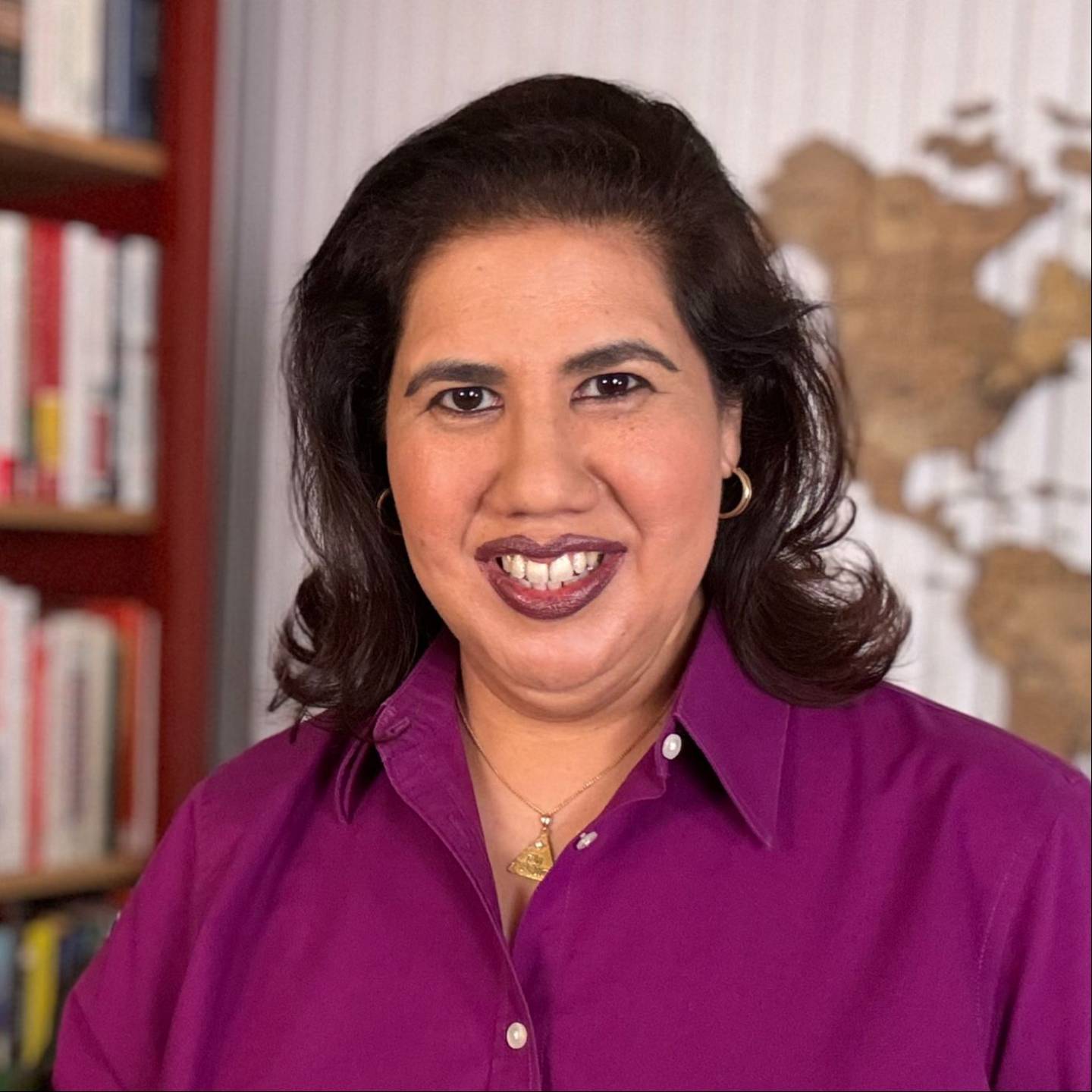
Based in Miami, Florida. CliftonStrengths-based workshops and coaching for teams, in person and online.
© 2026 Elvira Marie Chang. All rights reserved.
The non-Gallup information you are receiving has not been approved and is not sanctioned or endorsed by Gallup in any way. Opinions, views and interpretations of CliftonStrengths, Clifton Youth StrengthsExplorer or BP10 results are solely the beliefs of Elvira Marie Chang.
Gallup®, CliftonStrengths®, StrengthsFinder® and the 34 theme names of CliftonStrengths® are trademarks of Gallup, Inc. All rights reserved. To learn more about CliftonStrengths®, please visit https://www.gallup.com/cliftonstrengths.