
CliftonStrengths for Teams: What It Takes to Make a Rollout Stick
Most people come to me asking for a workshop. They've heard about Gallup® CliftonStrengths® (you might know it by its former name: StrengthsFinder®), they can feel that something about their team could be working better, and a workshop feels like the thing you book to fix it.
So when someone reaches out, the first thing I usually do isn't talk logistics. I want to understand what they're actually after. What's their Vision for the team or organization? What are their goals? What's getting in the way? And what sparked their interest in CliftonStrengths in the first place - is something not working (projects stalling, quality slipping, good people leaving), are they reaching towards something better, or both? Then I tailor the work to that.
Because here's what I tell them, and it's the most important thing in this whole article: a one-off workshop is not going to change your team's behavior or your culture. It can't. A workshop is a wonderful start - but on its own, it's a single building block. Real change asks for more.
So if you're a manager, a team lead, or someone responsible for a whole organization, and you want this to be real, this is the honest version of what it takes. Not to scare you off. To save you from spending money on a feel-good day that everyone enjoys and almost no one remembers by the next quarter.
And notice what I ask about first: the Vision - not the workshop. That's the reframe that changes everything. Rolling out CliftonStrengths is not your Vision. It's the how to help you reach your Vision - the means to becoming who you want your team or organization to be. Keep that straight, and the rest of this makes sense.
A note on how this article is written
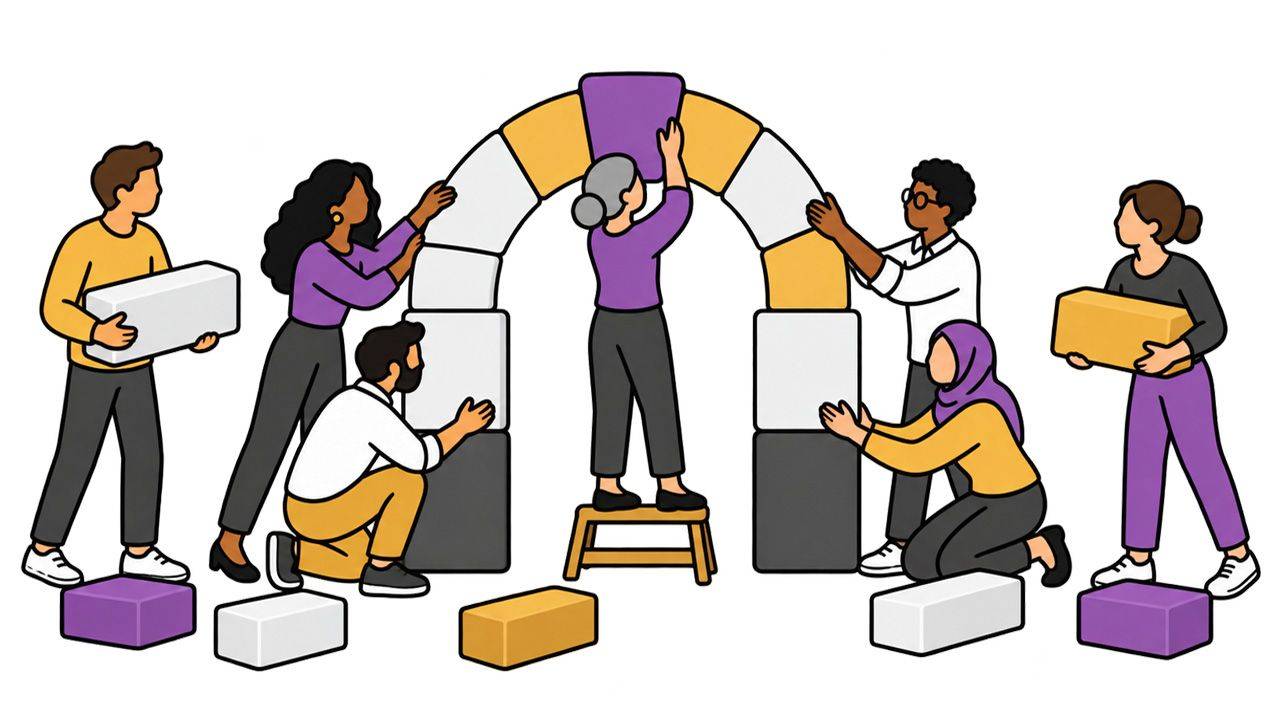
What follows is the complete picture - laid out for a large, layered organization, where the work has to travel across many teams and levels. I'm giving you all of it on purpose, so nothing's hidden. But before you tally it up and feel the weight of it, here's the reassurance up front: think of these as building blocks to draw from, not a checklist you have to complete.
The bigger and more spread out you are, the more of these you'll need, because it's a layered approach. But if you're leading a single, tight-knit team that talks every day, you may only need a handful - the closeness does the work that structure has to do in a big company.
And here's the reassuring thing about building blocks: even if you don't use every one, you can still build something real. Take what fits. Leave what doesn't.
(In a companion guide - more on that below - I break down which of these matter most for a single team versus a larger organization, so you can see your own situation clearly.)
The building blocks, at a glance
- Vision - who your team or organization is trying to become, and the reason behind everything else.
- Leadership - the people carrying it, whose commitment sets the tone.
- Communication - telling everyone what's happening, and why.
- Knowledge and Training - how people actually learn the concepts (yes, the workshop lives here).
- Opportunity - making the time and space to practice.
- Reinforcement - baking Strengths into everyday work.
- Modeling - people who visibly live it, so others can see what it looks like.
- Support - what keeps it alive after the coach goes home.
Now let's walk through each one.
1. Vision: What is your team or organization trying to become?
Underneath every request for a workshop, there's a why. Sometimes many whys. Something sparked this. Maybe you're trying to fix a specific pain - projects that stall, a product that keeps missing the mark, customers who aren't satisfied, good people walking out the door. Maybe you're reaching towards something - stronger results and a place people actually want to be. Often it's both.
Get clear on that. Whatever is driving you, there's a picture of who you want your team or organization to be. That picture is your Vision, and it's the reason for everything else.
Let's say what's really going on is that projects keep stalling - handoffs get dropped, the product isn't landing with customers, and everyone's frustrated. "We want a Strengths workshop" isn't the goal. The goal is a team that works together well enough to ship the right thing, keep customers satisfied, and do it in a place where people actually want to be. Name that. It tells you what success looks like and keeps you honest about whether you're getting there.
Here's the part people skip: a new identity doesn't happen overnight. It takes time, experimentation, cost, effort, and persistence. Your Vision - and the whys underneath it - is what carries everyone through all of that. When the work gets inconvenient (and it will), the Vision is what keeps people committed.
And remember the reframe. CliftonStrengths is not the Vision. It's the how you get there.
2. Leadership: Who's carrying this, and do they mean it?
Someone has to be driving this. And whoever that is, all eyes are on them.
A team takes its cues from its leaders. Their commitment trickles down through everyone. When they're consistent, committed, and genuinely supportive, people follow. But visible inconsistency - saying it matters, then acting like it doesn't - gives everyone else permission to check out. That's just how it works.
Leaders are also the only ones with the authority to decide how much of a priority this really is - the time, the budget, where it sits against everything else. Which means they decide not just what to do, but what to drop to make room for it. (More on that under Opportunity.)
A couple of things people miss here:
- Leadership isn't just the top. It has to reach managers at every level. Your direct managers and team leaders are the linchpins - they're the ones who carry this into their own teams, day to day.
- A leader doesn't have to be a manager at all. Sometimes it's an individual with real influence who leads by example and pulls others along with them.
3. Communication: Does everyone know what's happening, and why?
Communication is not "there's a workshop on the 14th and attendance is mandatory."
You're asking people to shift how they see themselves and each other. That deserves real communication, all the way through. Beforehand: here's what we're doing and here's why - share the Vision, include everyone who's part of it. That alone sets the stage, builds buy-in, and gives the whole thing credibility. Think about how many one-off trainings your people have sat through that went nowhere. You're signaling, early, that this one is different. This isn't an event. It's becoming part of how we work.
And communication doesn't stop after the kickoff. Keep sharing the steps, the progress, and - most of all - the wins. Show people how the team is actually shifting, what you're doing differently and better because of this work. Wins are contagious.
There's one more message worth sending loudly, and it's the heart of why I do this: this is an investment in each person, not a "work training." Yes, it happens at work. But CliftonStrengths was built to honor what's unique about each individual - and those concepts don't clock out at 5pm. What people learn here, they carry everywhere: home, relationships, their own growth - now and twenty years from now. It's transferable, and it's timeless. Tell people that. It changes how they show up.
4. Knowledge and Training: How do people actually learn this?
Here's the block everyone thinks of first. But even this one is bigger than "take the assessment and attend the session."
The real goal isn't the training. It's each person understanding the concepts well enough to actually use them and make them part of their everyday. There are a few ways to get there, and I've had organizations use one, two, or a mix of all three:
- Live workshops give you the group energy - the shared experience, the team building, the room lighting up together.
- Self-paced courses for individuals give you flexibility, consistency, and something people can revisit - especially handy for new people as they join later.
- One-to-one coaching gives people private time to ask the questions they won't ask in a group, and to work out how this applies to their specific role - or their life, since what's happening outside work often shapes what happens in it. It also builds real trust and buy-in.
Cost is a real factor here, and I won't pretend otherwise. Maybe your size doesn't allow coaching for everyone. That's fine - these are ideas and examples of what's worked for others, not a mandate.
Individual learning is the base. Two more layers go on top of it:
- Team dynamics - how your specific mix of people works together.
- Manager and leader development - because they're the ones who have to guide this through their own teams.
Note: Don't treat training as a single event. Consider ongoing mini-sessions - an hour or two every month or two - to build on the basics, add new concepts, or make room for group discussion. You can even shape the topics based on the questions coming from your people.
5. Opportunity: Where's the time to practice?
This one gets ignored, and it quietly sinks more rollouts than anything else.
You cannot pile CliftonStrengths on top of an already-full plate and expect it to take. Leadership has to make actual room - time to learn the concepts, and (more importantly) time to practice them. Think about how you treat a new hire: you give them extra room and fewer tasks while they ramp up. This is no different. Something has to give.
Maybe that means one less execution goal this quarter, in exchange for your people learning to apply what they now know about themselves and each other. That's not lost productivity. That's the investment. Opportunity is making this a priority, protecting the time to practice, and clearing the obstacles out of the way.
6. Reinforcement: How does this show up in everyday work?
Training plants the seed. Reinforcement is what makes it grow - and it's where behavior slowly becomes culture.
The idea is simple: Strengths-based language and thinking have to show up in the day-to-day, not just in the workshop. A few concrete ways that happens:
- Decide how your group will share results and Team Grids (a simple chart showing everyone's top Talent Themes side by side, so people can see how the team fits together). Put them somewhere visible - and keep it to each person's Top 5-10, never full lists, so it stays about understanding, not labeling.
- Normalize bringing Strengths into regular conversation. When two people see something differently, name why - "I can see how your Responsibility® wants this detail stated, whereas my Communication® wants to minimize stressing that point to tell a smoother story." That shared understanding is exactly what you're after.
- Equip managers to actually use this with their people: How could you point your Strengths at this project? You're stuck - who on the team sees this differently and could help? What are your blind spots here?
- Weave it into goals and reviews. Not instead of real priorities - as a way to reach them.
- In team meetings, leave room to call out a win where someone used their Strengths to solve a problem, or to head one off. Reinforce the behavior you want to see more of.
7. Modeling: Who's showing everyone what it looks like?
Let's be honest about people: this won't land the same for everyone. Some will love it. Some will struggle. Plenty will sit in the middle. And a few, if they see it as a mandate, will just go through the motions.
That's exactly why you need people who visibly model the way you're hoping everyone will work. Ideally these are your leaders - but peers with real influence, the ones others genuinely look up to, matter just as much.
A practical move, especially in a bigger organization: don't try to flip everyone at once. Start with one key team. Work out the kinks there, learn what actually works, improve it - then let it spread from that proof point outward. A living example is far more convincing than any announcement.
8. Support: What keeps it alive after the coach goes home?
Behavior and culture change take time and practice - which means you need support for the long haul, not just for the launch.
You might bring in an external Gallup-Certified Strengths Coach for the initial work (someone like me). But that coach won't be standing beside your team forever. Over time, your organization has to grow into its new identity on its own. And there will be hiccups. Plan for how you'll handle them:
- Depending on the size of your organization, have one or a few people get Gallup-certified, so you've got in-house support.
- Or keep an ongoing relationship with a local Gallup-Certified Strengths Coach who can consult, train, or coach as needed.
- Or grow your own - offer deeper training to a handful of people and start a Strengths-based mentoring group, even as a volunteer, extracurricular program.
Some organizations have started activity groups or book clubs to keep the learning going on their own steam. Who knows - it might just turn out to be contagious.
Want this as a guide you can actually work through?
Reading about a set of building blocks is one thing. Knowing which ones your situation needs is another.
That's what I built Your Rollout, Block by Block for - a free guide that turns everything above into something you can actually use. It lays out all eight building blocks with a simple, at-a-glance view of how much of each a single team needs versus a larger, layered organization - so you can size the work to your own situation and take what fits.
FREE GUIDE
Your Rollout, Block by Block
All eight building blocks, with an at-a-glance view of how much of each a single team needs versus a larger organization.
Frequently asked questions
Isn't taking the CliftonStrengths (or StrengthsFinder) assessment enough?
No - and that's the whole point. The assessment is the on-ramp, not the destination. On its own, it gives you a small lift. According to Gallup's own research, companies see roughly a 7% rise in engagement just from having people take the assessment - while organizations that go further and build Strengths across the company see roughly a 23% rise. The difference isn't the tool. It's everything you build around it: the practice, the reinforcement, the everyday use.
Why didn't our last workshop stick?
Almost always because it was treated as a one-and-done event instead of the first piece of something ongoing. If there was no Vision behind it, no leadership follow-through, no time to practice, and no reinforcement afterward, the insight had nowhere to go. That's not a failure of the tool. It's a gap in the building blocks around it.
Do we really need all of them?
Probably not. This is the comprehensive set for a large, layered organization. A small, close-knit team can do a lot with just a few, because the daily closeness carries some of the load. Take what fits your size and situation.
Does this only work for big companies?
Not at all. It scales down beautifully - in fact, small teams often have an easier time, because they interact constantly and can reinforce this naturally. You just need fewer of the formal building blocks to make it stick.
Does this only apply to work?
This is the part I care about most. No. CliftonStrengths is built around each person's Individuality, and those concepts travel - into your home, your personal relationships, your own growth, for the rest of your life. The work gets done at work, but what people learn is theirs to keep.
So, where does that leave you?
A workshop can be a beautiful beginning. But you already knew, somewhere, that a single afternoon doesn't rewire how a team works - and now you know why, and what actually does.
Start with your Vision. Get honest about which of these building blocks your situation needs. Bring your leaders in first. And treat this as what it is - an investment in your people that pays off in who they become, together, and everywhere else in their lives too.
You don't have to do all of it. You just have to start with what's right for you.
If you'd like help working out which of these your team needs, tell me about your team.

