Why Your Individuality Matters More Because of AI
AI is changing the world we live in. It's changing how work gets done, how we find information, and who (or what) answers when we call for help. For some people, work has already been disrupted. Others are wondering what's coming next.
I get it. If you're feeling uneasy, you're not alone. Lots of people are trying to figure out what AI means for them, and researchers have been asking how it makes us feel. In 2026, when the Pew Research Center asked U.S. adults how the growing use of AI in daily life makes them feel, about half said more concerned than excited. Only about 1 in 10 said more excited than concerned. Most of the rest said they feel both.
From what I've seen, people tend to get distracted in one of two ways:
- By the opportunity. They chase every new tool and every new possibility.
- By the fear. They feel threatened, powerless, or like they're not enough.
Either way, all of their attention is pointed outward, at AI.
This is a chance to point it somewhere else. Not at what AI can do, but at yourself. More specifically, your Individuality.
No matter how you feel about AI, it's putting a spotlight on the importance of Individuality. If anything, it's elevating it. In a world that's chasing better, faster, stronger, and cheaper, what's unique about you becomes more valuable, not less.
Before we go further, I want to make one distinction clear, because I blurred it myself at first. Your Individuality isn't the same as your humanity. Your humanity is what you share with every other person. Your Individuality is what's different about you. Every person using AI shares that same humanity. Being human doesn't set anyone apart.
So this article isn't about humanity versus AI. It's about your Individuality - and why AI makes it matter more.
Individuality is at the heart of my work. As a Gallup®-Certified Strengths Coach, I help people understand what makes them uniquely them using CliftonStrengths® (formerly StrengthsFinder®), and learn to use it in every part of their lives. So as AI started changing how we work and live, I kept thinking: What does this mean for each person's Individuality? That question is what inspired me to write this.
In this piece, I'll look at what AI does and why it tends to make our work more alike. Then I'll share why that makes your Individuality matter more, where your CliftonStrengths results come in, and how I use AI myself. And I'll end with two things you can do for yourself in this time of AI.
What this article covers
- What AI does, in plain terms
- Who is your work really for?
- Help isn't the same as doing the work
- What you bring that AI doesn't
- How I use AI, and where I want a person
- What can you do for yourself in this time of AI?
- Where does this leave us?
What AI does, in plain terms
Let's take a step back.
AI isn't the first big change to reshape how we live and work. Think about agriculture, the printing press, and the industrial revolution. Think about trains and planes, the telephone, photography, computers, and the Internet. Each one changed how people lived and worked, and the skills they needed.
AI is simply the latest (and it won't be the last).
AI is not a villain. It's a tool - a very powerful one.
And like any tool, what it does for you depends on how you use it.
So what does this tool actually do? That depends on what we mean by AI, because it's a broad term. It includes:
- Tools many of us use directly, which answer questions, write, summarize, analyze, and create images
- AI built into the apps and services we already use, like email, search results, and customer service
- Tools that can carry out multi-step tasks with little supervision
- Robotics and automation in physical work, like warehouses and manufacturing
- AI in science and medicine
- Automated systems that make or inform decisions about people, like screening job applicants or evaluating loan applications
There's real potential here, and not only at work. Some of the most promising uses are in science and medicine. AI that predicts the shapes of proteins, which all life depends on, earned its creators a share of the 2024 Nobel Prize in Chemistry. More than two million people in 190 countries have used it, helping researchers better understand problems like antibiotic resistance. However, there are real concerns too, including the ones in this article. And AI is changing fast. Some of what's true about it today will likely look different within six months.
In this article, I focus mostly on the kind most of us use (often called generative AI): AI that learns from a vast amount of mostly human-made content and generates responses, whether you open it yourself or meet it inside the apps you already use. That's where the research on how it shapes our work is clearest. But the heart of this article applies to all of it. The more AI can do, the more your Individuality matters.
The AI most of us use, in plain terms
What it learns from: a vast amount of existing content, mostly created by people.
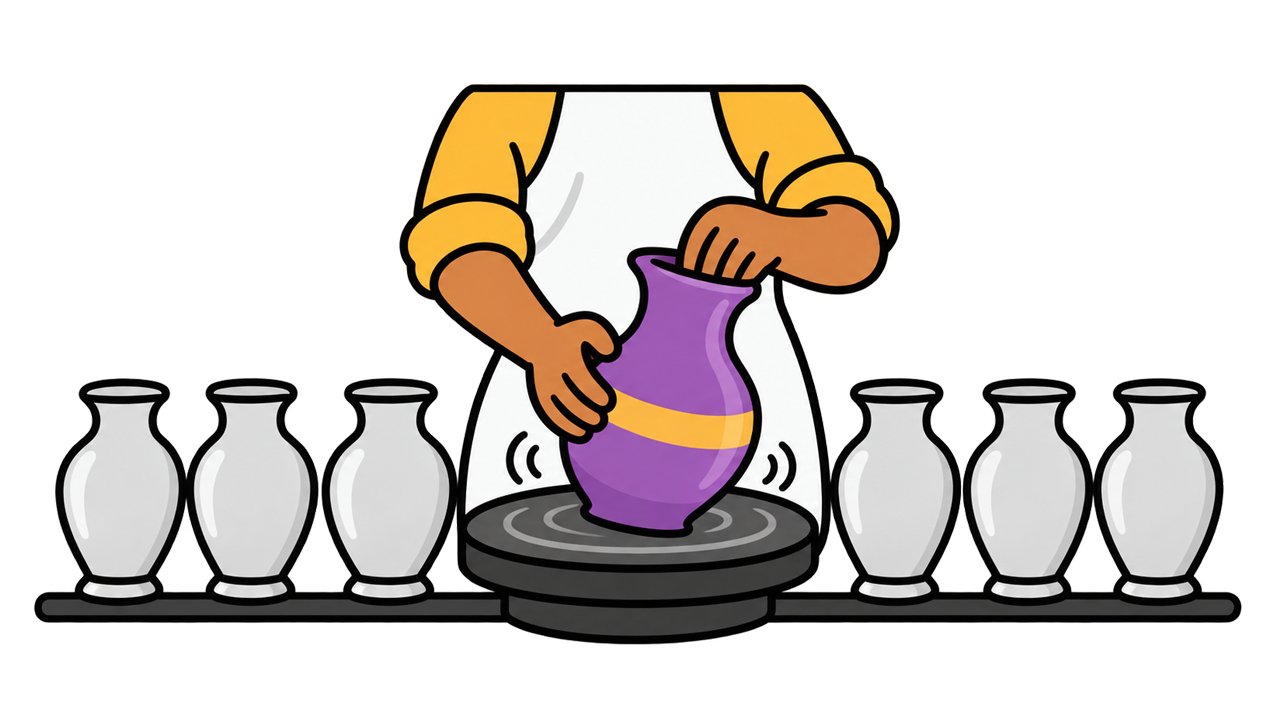
What it produces: the most likely response to what you ask, based on the patterns it learned from all of that content.
What "most likely" tends to mean: typical. The phrasing, ideas, and conclusions that show up most often.
What it's good at: speed, scale, sorting through huge amounts of information, and repeatable tasks.
What to watch for: it can be wrong while sounding completely sure. And it tends to agree with you.
That's why AI is showing up in so much work. It can draft emails and reports, summarize long documents, answer routine customer questions, sort through data, and handle many of the repeatable tasks that fill a lot of people's days. If your work involves a lot of tasks like these, you may have already felt the change. And more and more, it's taking on complex, multi-step work too.
There's one more thing to watch for. AI tends to agree with you. In a 2026 Stanford study published in Science, AI models endorsed people's choices 49% more often than humans did when people asked for advice. And the people in the study couldn't tell. They rated the flattering answers just as objective as the balanced ones. If you don't know to look for it, it's easy to take that agreement at face value.
Now, hold on to that word: typical. It isn't the same as consensus. Nobody voted on the answer. It's simply what shows up most often in what the tool learned from.
Who is your work really for?
So what's wrong with typical? To answer that, think about who your work is for.
Maybe it's one person - a client, a patient, a friend. Maybe it's a small group, like a team or a classroom. Or maybe it's much larger: a community, a whole university, a city, even a country. It's easy to assume that the bigger the group, the more typical it is. That if your work reaches large numbers of people, you're working for the masses.
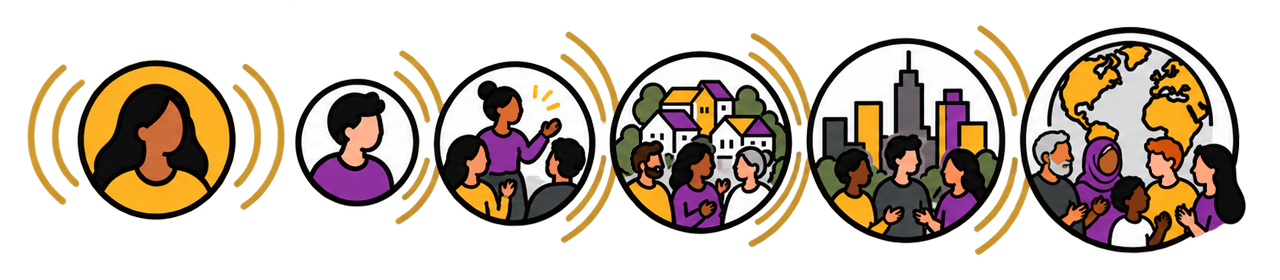
But even large groups aren't the masses. Students at one university have subtly different qualities and priorities than students at another. One city differs from the next, and one country from its neighbors. Age, culture, language, history, values, beliefs, geography - those are just some of the things that make a group, a group. However large it is, the group your work is for is still a specific set of people.
And no matter who you are or what you do in the world, you're not wired to satisfy the masses.
That's where what I call Right Fit comes in. Right Fit is a mutual match. What you bring fits the people your work is for, and they're a fit for you. One size doesn't fit all. (I'll come back to what makes you a Right Fit for someone a little later.)
Now here's where AI comes in. When lots of people use the same tools, their work starts to look alike. A 2026 review of 19 studies found a small but consistent effect: work created with AI help was more alike from person to person than work created without it.
And typical isn't neutral. In a 2025 Cornell study, Indian and American participants wrote essays, some with an AI writing assistant and some without. The AI's suggestions nudged the Indian participants to write more like Americans. Some even started describing their own festivals and food from a Western point of view. Typical reflects whose voices show up most in what the tool learned from. It may not reflect yours, or the people your work is for.
Designing for the typical isn't new. Long before AI, people tried designing for the average person. Here's what they found.
In the book The End of Average, Todd Rose tells the story of a 1950 U.S. Air Force study. Researchers measured 4,063 pilots and focused on the 10 body dimensions most relevant to designing a cockpit. Even with a generous definition of average (the middle 30% of the range for each dimension), how many pilots were average on all 10 dimensions?
Zero. Not one.
The average pilot didn't exist. Typical fits no one exactly. And typical is what AI tends to hand us.
So whether you're one person or an entire organization, aim for Right Fit, not typical. That's where your work makes a real difference to the people it's for.
Help isn't the same as doing the work
AI is a tool, and depending on the task, it's definitely one that can help. But help is not the same as doing the actual work.
Think about everything that goes into the work itself. Where did the idea come from? Who decided to act on it? Whose criteria guides how it moves forward? How is the idea being carried out? Who's affected by the decisions made and the actions taken? And who benefits from what's being created (for example, customers, students, patients, or the public)?
Someone has to own that. We need people to shepherd the process. And to steer anything, you have to know where it's supposed to go.
Here's a super simple story. In my second year of product management, my manager told me I was getting promoted. He told me what my percentage salary increase would be and what my new salary would be. I think he was expecting me to be happy about the news. Instead, I looked at him and asked, "Who did the calculation?"
He asked why. I told him the new salary didn't match my percentage increase. It was noticeably more than the simple percentage should have given me. He was embarrassed, and he had to go figure out what went wrong. A spreadsheet had been used, and it was a simple formula mistake.
And what would he do now? Give me the lower salary, or the higher (mistaken) one?
That was one cell in one spreadsheet. But the result affected me personally. And I only caught it because I'm a numbers person. I knew what the answer should look like. If I were bad at math, I probably wouldn't have known. Luckily, it was caught early, while it could still be addressed, rather than becoming a bigger issue later.
Now imagine that same kind of mistake with AI. It isn't one cell anymore. It can be whole reports, recommendations, answers, and decisions, all produced in seconds. Some AI tools can even take actions on your behalf. And a mistake can be harder to spot than a broken formula, because AI gives you the most likely answer - and a likely answer can be wrong while sounding completely sure.
I've seen this firsthand. More than once, an online help tool has told me how something would work, and my own testing showed something different. (I'm a former engineer, and I still test things.) Recently, it told me a sign-up process on my website would work the same way for everyone. My testing showed it didn't. And even my testing was limited. So now, who knows what each person will actually experience?
Over time, small mistakes like these add up. As more of the work gets automated, things can slowly drift off course. And if no one who knows what right looks like is there to steer it back, no one notices until it's a much bigger problem.
It also takes trusting yourself enough to question what you're given. In a 2025 study, researchers at Microsoft and Carnegie Mellon University surveyed 319 knowledge workers about how they used AI at work. Those who were more confident in AI said they did less critical thinking. Those who were more confident in themselves said they did more.
The way I read it: when you trust the tool more than you trust yourself, you're less likely to question what it gives you. Add a tool that tends to agree with you, and that's how mistakes slip through. Trusting yourself - what you know, what you've experienced, your sense of what right looks like - is what keeps you questioning. And questioning is how you catch the drift early.
To use AI well, you need to know what right looks like - and trust yourself enough to question what you're given.
What you bring that AI doesn't
Think back to your favorite teacher. Pick one who stands out in your mind.
Why does that person stand out? Was it the way they explained things that engaged you? Were their lessons creative and fun? Were they a good listener who saw you as a promising, talented person rather than just another student in a crowded classroom? Were they clear, did they enforce the rules, and did they create a safe environment? Did they encourage questions, exploring, and trying new things? Were they precise and focused on accuracy?
Now think of a teacher you didn't like. Can you see how differently the two of them went about the same job?
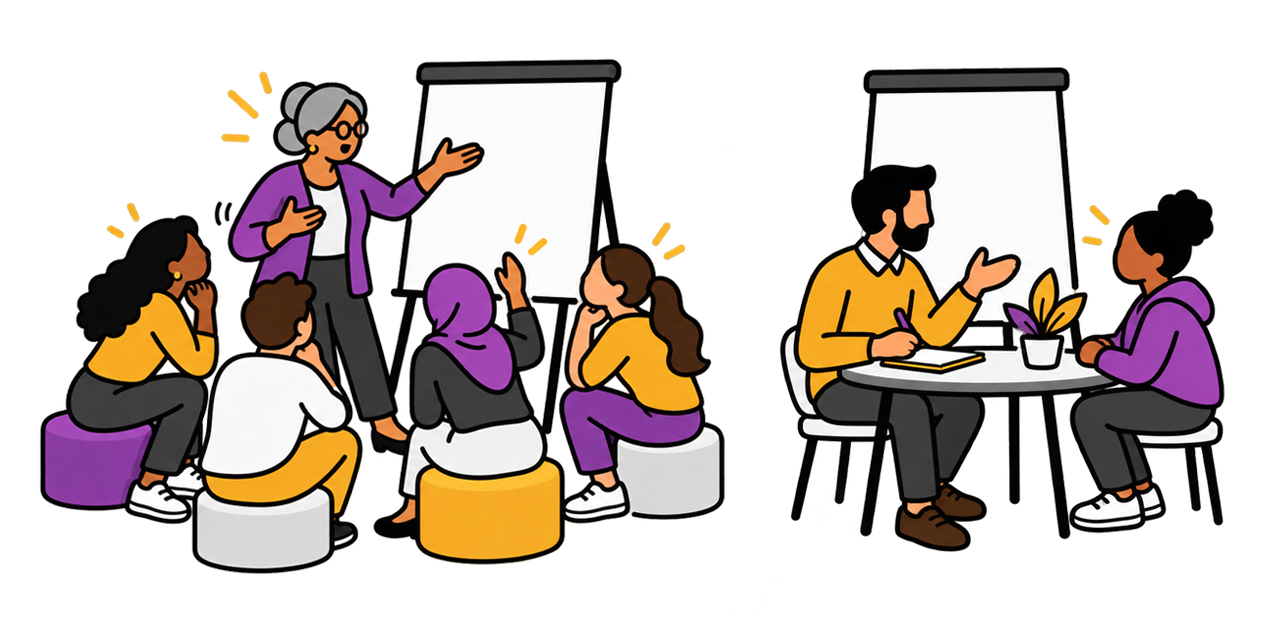
Think about what a teacher is expected to do. Teach the curriculum and help students understand it. Show up, present lesson plans, evaluate students, and keep some sort of order and safety. Every one of your teachers may have been measured on those same things by the principal, the dean, or the school board. But you know from your own experience that each one approached the job very differently - and impacted each student very differently.
That's what Right Fit describes. That teacher may have been the Right Fit for you, but not your classmate.
So what made each teacher so different? It comes down to three things: their What, their How, and their Why. You have them too.
What, How, and Why
Your What: what you do.
Your How: the way you naturally go about it.
Your Why: what drives you - your values, your beliefs, what matters to you.
AI can take on more and more Whats, and not only the repeatable ones. A lesson plan is a What. Your favorite teacher was a How and a Why.
So how do you get clear on your How? This is where CliftonStrengths, an assessment more than 38 million people have taken, can help. The assessment identifies your predominant Talent Themes. Here's how Gallup defines the terms:
CliftonStrengths Vocabulary
Talent: a naturally recurring pattern of thought, feeling, or behavior that can be productively applied
Talent Theme: a category of Talents (a grouping of similar Talents)
In other words, your results describe how you naturally think, feel, and behave. They give you language for your How. And because there are 34 Talent Themes, your combination is remarkably specific to you. According to Gallup, the chance of someone else having your exact Top 5 Talent Themes, in the same order, is 1-in-33.4 million.
Your How isn't only your Talent Themes, though. I'm a numbers person. I'm also visual: I'm naturally good with colors, images, and layouts. Neither of those is a Talent Theme, but both are part of how I do what I do.
Think back to my salary story. Being a numbers person is how I noticed the mistake. That's part of my How. Speaking up when the mistake was in my favor? That's my Why. I believe in being honest and doing the right thing. Two of my Top 5 Talent Themes are Belief® and Responsibility®, and for me, that shows up as valuing trust and doing things on the up-and-up.
And then there's your experience. AI can tell you (or show you) someone else's experience. But it doesn't have its own experience to share. And your experience and your Individuality shape each other. Your Talent Themes influence your needs and your values, and those shape your reactions, your feelings, and your perspective. Two people can live through the same moment and come away with completely different experiences of it. Your experience is uniquely yours.
This is also what makes you a Right Fit. When you live true to your How and your Why, it shapes how and why you do what you do. And that draws in the people you're the right match for - and who are the right match for you. Your CliftonStrengths results impact this too. Because your Talent Themes influence your needs and your values, they help you define what a Right Fit looks like for you.
Your value was never only in your What.
How I use AI, and where I want a person
Do I use AI? Yes. I'm using it to help me write this article.
As I mentioned, I'm visual. I'm not great at putting my ideas into written words easily. I'd much rather draw you a picture or explain my ideas out loud in a discussion, but I can't do that easily (or quickly) in a written article.
So I capture all of my ideas, my stories, and even the flow of the content. Then I use AI to help with the wording. We go back and forth. It asks me questions, I answer them, and I go through the whole article multiple times until it captures what I want to convey, in the way I'd say it, and it sounds like me. The initial idea, the concepts, my thoughts, my examples, my answers, and all of those iterations are what make it mine.
At first, the drafts didn't sound like me at all. AI would use expressions I'd never say. I was born and raised in the U.S., but I'm a blend of cultures. My upbringing, the way I speak, and even the way I think are influenced by other cultures - not only within my family, but from living in Miami too. I don't know if that's why, but I kept correcting it and pulling those expressions out. (Remember the Cornell study? Typical isn't neutral.)
Even so, I appreciate the help. It's helping me with a gap I know I have.
But there are plenty of places where I prefer a person. I'm a big movie-goer. I use an app to reserve my tickets, but when I get to the theater, I want people at the ticket counter and working the concession stand. To me, that's part of the movie-going experience. I've gotten to know the manager at my local theater because I'm a regular, and we talk about movies. It makes the whole experience more social and more enjoyable. I've been to theaters where the concession counter is completely automated, and I hate it.
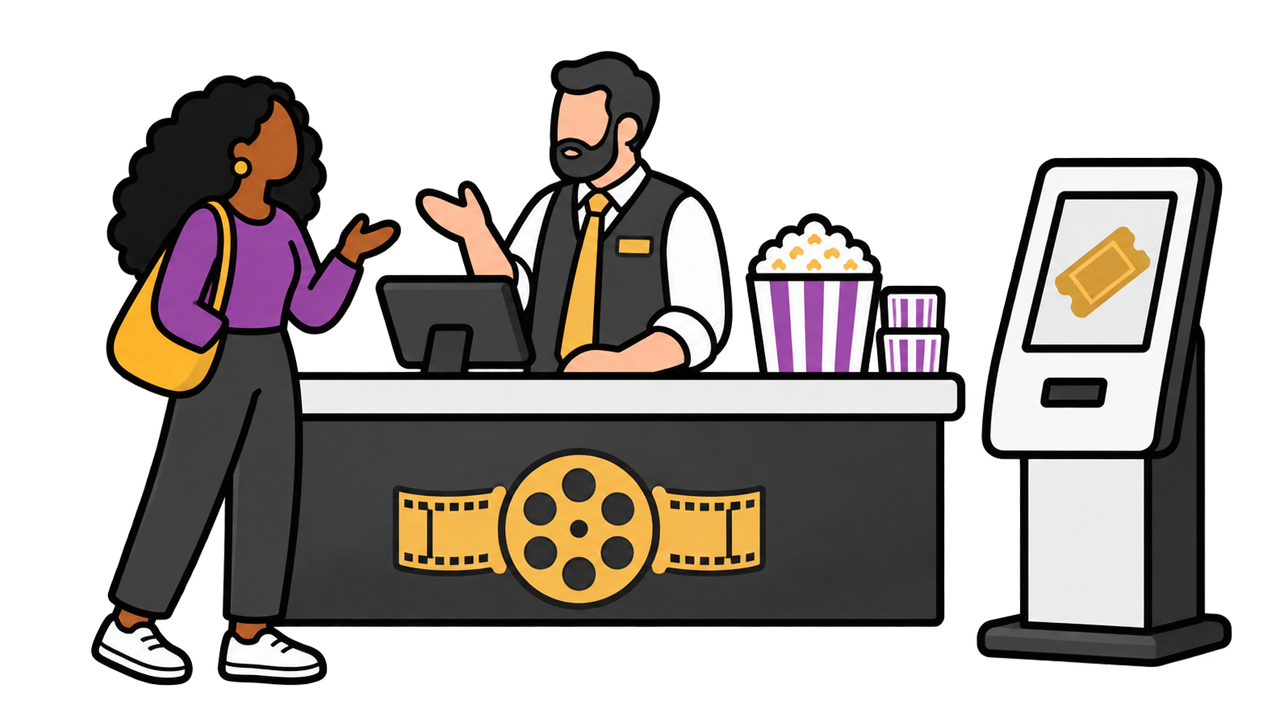
It's the same with my bank. I like having the option of the ATM or a teller. The ATM does a lot, and it does it quickly. But it doesn't meet all of my needs, and I wouldn't want it to stand between me and a person.
Those are my preferences. Someone else may love the self-serve kiosk. And that's the point: where you want a tool and where you want a person is personal too.
AI can help with the gaps you know you have. So knowing yourself comes first.
What can you do for yourself in this time of AI?
Two things.
1. Explore your Hows and Whys
Most people focus on what they do. If what you do is a reliably repeatable process that can be automated, that's a risk. But how do you do what you do? And why do you do it that way?
Get clear on the Individuality you bring to what you do. It differentiates you, and that adds value. Your Hows and Whys may even transfer to a different type of role - one that's a better fit for you.
Remember that favorite teacher? Now turn it around. Think about how you show up - at work, at home, and with the people in your life. What do people tend to come to you for? What do you do differently than others who do the same thing? What matters to you so much that you won't compromise on it? What's important enough to you that you'd stand up for it? Your answers are clues to your Hows and Whys.
This is where your CliftonStrengths results can help.
- If you have them, revisit them with your How in mind. (If you haven't really dug into them yet, the six most common mistakes people make about CliftonStrengths is a good place to begin.)
- If you don't have your results yet and you're interested, you can check out how I work with individuals.
I walk through how to use your results to explore your Hows and Whys in my companion article: What Makes You Valuable When AI Can Do So Much?
2. Learn what you can about AI
Remember, AI is a tool. The more you understand it, the more it can help you.
Before I started, I was intimidated. I was afraid I'd do something wrong. So I took two online courses where someone showed me around and walked me through what I could do. I'm sure I only know a fraction of what's possible. But that fraction is already a huge help to me. (My technical background helped, but you don't need one to start.)
And be honest with yourself about the hype. From my experience, a lot of what you hear about AI comes from carefully controlled demos. When you try it on your own work, it often doesn't go that smoothly. Some of it is overhyped. Some of it is genuinely remarkable. Trying it yourself is how you learn which is which.
Remember the two distractions from the beginning? Hype feeds both of them - the opportunity and the fear. A realistic understanding keeps you focused on what matters.
There are so many AI tools out there. Learn what you can. Understand what they can and can't do. Figure out their boundaries - where AI can fill your gaps, and where you fill its gaps.
Don't let fear or intimidation of the unknown stop you from learning about it and keep you behind.
Then ask yourself: How can it help me? How can it help me in what I already do well? And how can it balance the gaps within me?
Where does this leave us?
AI is just going to get better and better. We're going through the growing pains of an evolving technology. And it's already better than us in some ways - speed, a vast knowledge base, computing power.
So let me be honest. Leaning into your Individuality won't protect you from every disruption AI brings. Your job could still be at risk. But knowing your Hows and Whys puts you in a better place to handle the changes - and to add value in a way AI doesn't.
Over time, what people are valued for has shifted. The way I see it, people have been valued for their physical labor, for what they know, for who they know, and for what they can do. But now, we're in a time when the more widespread the typical gets, the more valuable your Individuality becomes.
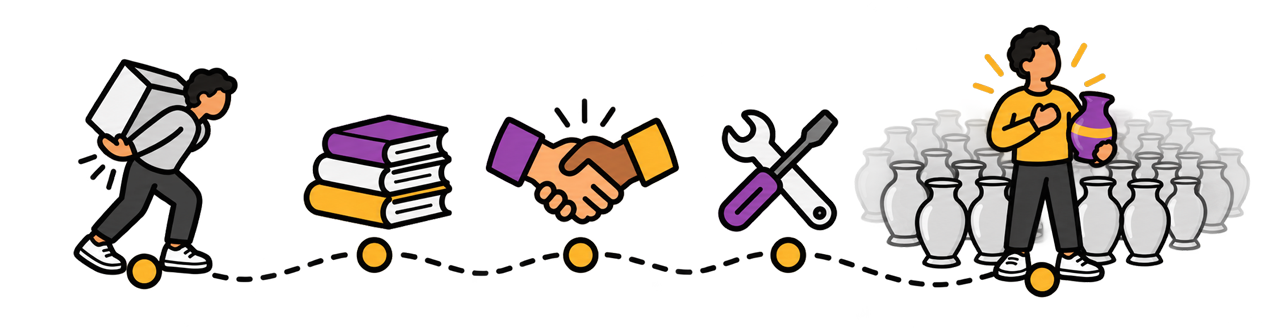
AI is opening the door for you to be valued for your Individuality.
Once you know your Hows and Whys, you get to choose where to aim them - at work, at home, and everywhere in between.
When you're ready to explore your own Hows and Whys, my companion article walks you through it: What Makes You Valuable When AI Can Do So Much?
If you'd like support exploring your own results, see how I work with individuals. And if you're thinking about what this means for your team, here's how I work with teams.
Frequently asked questions
Will knowing my CliftonStrengths results protect my job from AI?
No, and it's important to be honest about that. AI may still change or disrupt your work. What your results do is give you language for your How - your natural patterns of thinking, feeling, and behaving - so you can add value in ways that are distinctly yours and handle change from a stronger place. And if your work does change, your Hows and Whys go with you. The What may be different in your next role, but your How and your Why carry over.
What's the difference between Individuality and humanity?
Your humanity is what you share with every other person. Your Individuality is what's different about you: your How (the way you naturally go about things), your Why (what drives you - your values, your beliefs, what matters to you), and your experiences. Every person using AI shares that same humanity, so being human doesn't set you apart. Your Individuality does.
Why does AI tend towards the typical?
The AI tools most people use learn from a vast amount of existing content: books, articles, websites, forums, code, and conversations, mostly made by people. Some of it is very old, like digitized books, but most of it comes from the internet, so it leans towards recent decades. When you ask them something, they produce the most likely response based on the patterns they learned. Most likely tends to mean typical: the phrasing, ideas, and conclusions that show up most often. That's also why typical isn't neutral. It reflects whose voices show up most in what the tool learned from. And when lots of people use the same tools, their work starts to look alike. A 2026 review of 19 studies, by researchers Alwin de Rooij and Michael Mose Biskjaer, found a small but consistent effect: work created with AI help is more alike from person to person. It's a tendency, not a rule. You can push back against it by bringing your own ideas, examples, and criteria for it to work from.
Does this apply to all kinds of AI?
The research in this article is about the kind of AI most of us use: AI that learns from a vast amount of mostly human-made content and generates responses, whether you open it yourself or meet it inside other apps. Other kinds of AI, like robotics or systems that screen job applicants, work differently, so the research on typical doesn't directly apply to them. But the core idea does. The more AI can do, the more it matters what you bring - your How, your Why, and your experience.
What does Right Fit mean?
Right Fit is a term I use for a mutual match: what you bring fits the people your work is for, and they're a fit for you. It applies whether you're one person or a whole organization. Typical aims at everyone and fits no one exactly. Right Fit is where your work makes a real difference to the people it's for.
How can I use AI without losing my Individuality?
Start with what's yours: your ideas, your stories, your criteria, and your sense of what right looks like. Use AI for the gaps you know you have, not as a replacement for what you bring. If you're using it to help you write, give it samples of your own writing to work from, then go back and forth until it captures what you want to say, the way you'd say it. Watch for expressions you'd never use, and take them out. And question what it gives you, especially when it agrees with you.