What Makes You Valuable When AI Can Do So Much?
AI can do a lot these days. It can write, research, analyze, summarize, design, and answer questions in seconds. Every few months, it seems to take on something new. And with every headline about what AI can do, a quieter question follows for a lot of people:
If AI can do more of what I do, what does that mean for me?
Maybe parts of your work have already changed. Maybe you're watching it happen to people around you. Or maybe you're simply wondering what's coming. Whether you're feeling fear, worry, or plain curiosity, you're not alone.
It's a good question. And it can be a scary one - especially because we're often taught that our value comes from what we do. Think about it. One of the first things we ask when we meet someone is "What do you do?" We introduce ourselves by our job titles. We're praised for what we produce, and we often measure ourselves by how much we get done.
So when something comes along that can do more of what we do, it can feel like we can easily be replaced.
That feeling can shake us. When we feel insecure and unsure, we act out of fear. We slip into survival mode, instead of acting from who we really are. But as scary as this time may seem, it's also a chance to ask a bigger question:
Who are you, if you're not defined by what you do? And where does your value come from?
These questions are close to the heart of my work. As a Gallup®-Certified Strengths Coach, I help people discover what makes them uniquely them using CliftonStrengths® (formerly StrengthsFinder®). And with so much talk about what AI can do, I can feel these questions sitting underneath a lot of people's concerns, even when no one says them out loud. So I want to address them directly.
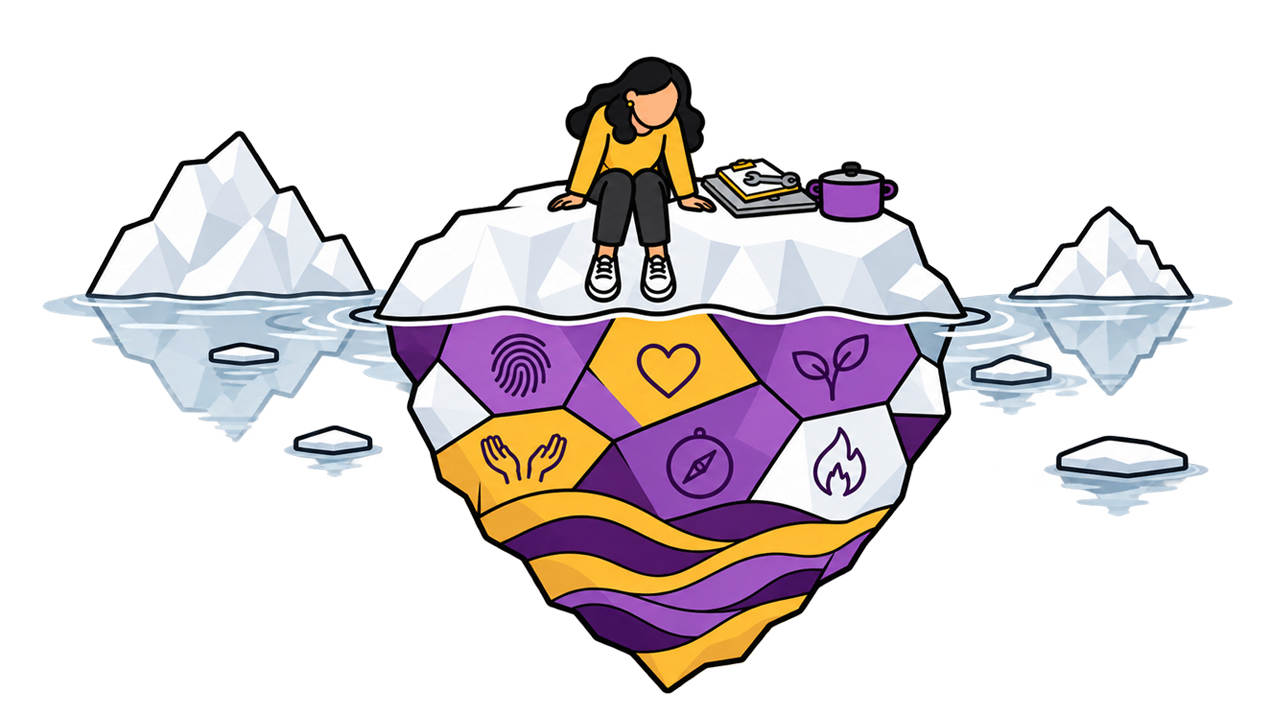
To explore them, it helps to separate what you do from how and why you do it. I break it into three parts: your What, your How, and your Why.
What, How, and Why
Your What: what you do.
Your How: the way you naturally go about it.
Your Why: what drives you - your values, your beliefs, what matters to you.
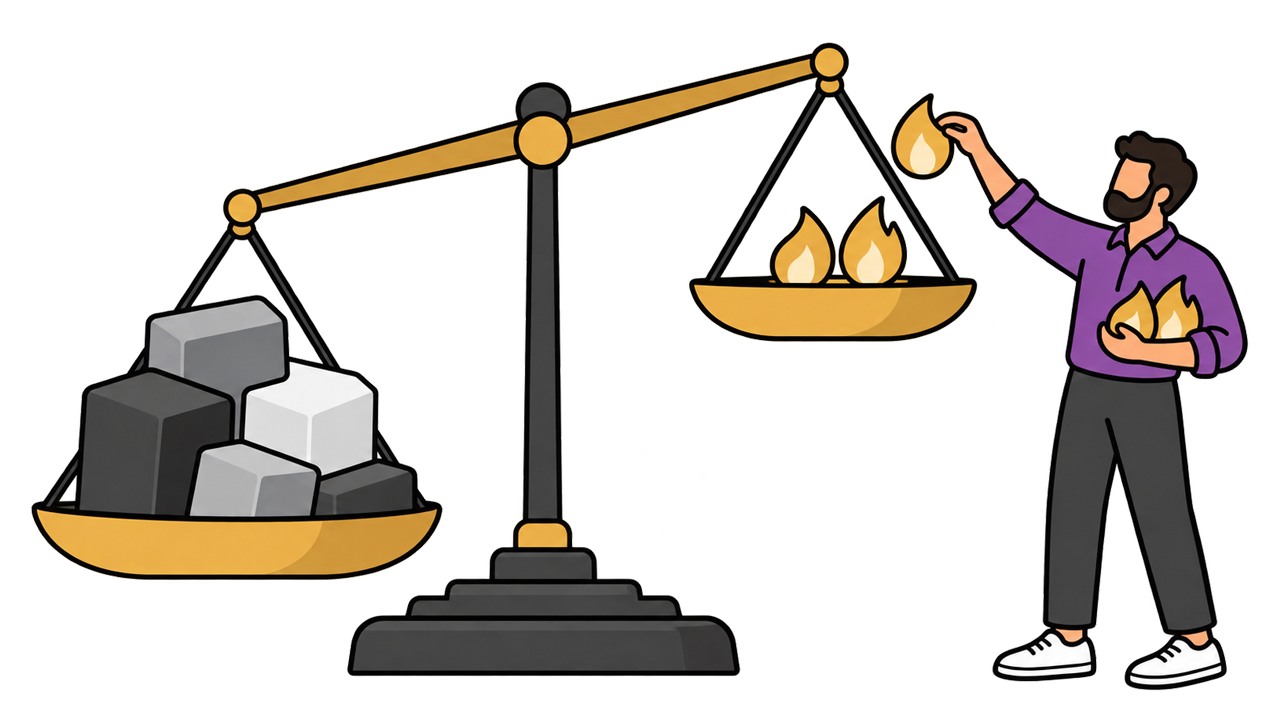
AI can take on more and more Whats, and not only the simple, repeatable ones. But your How and your Why are a different story. They come from your natural tendencies, your values, and your experiences. That combination is part of your Individuality - what makes you, you. And AI is making it matter more than ever, which I explore in Why Your Individuality Matters More Because of AI.
So where does CliftonStrengths come in? It's an assessment from Gallup that identifies your natural patterns. Because your How and your Why are so innate to who you are, they can be hard to recognize, let alone put into words. CliftonStrengths gives you language you can respond to. You might read your results and think, "Yes, that's me." or "I never thought about myself that way." You can take what fits and question what doesn't. That's especially helpful if you've ever struggled to describe yourself or see yourself clearly.
In this article, we'll start with your What. Then we'll explore how to find your How and your Why. Along the way, you'll see how your CliftonStrengths results can help. Finally, we'll look at what AI can and can't do when it comes to understanding yourself.
I'll use my own results and experiences as examples along the way, so you can see what this looks like in real life. But they're only examples. What comes naturally to me won't look the same for you. The emphasis is on you, your How, and your Why.
What this article covers
- Your value was never only your What
- Find your How
- Find your Why
- Your Hows and Whys aren't tied to your What
- What about asking AI to explain your results?
- Where do you go from here?
Your value was never only your What
Let's start with the part that's easiest to see: your What. To show you what I mean, I'll start with mine.
What do I do? I talk to people day to day. I teach. I listen, interpret, answer questions, ask questions, and create content based on what others are asking me.
Can AI do some of that? It can. AI can answer a lot of common questions, and it can answer them quickly. But the questions I get are often deeply personal, and the answers need to be specific to that person - their results, their life, their circumstances. And how I do what I do is incredibly important to me.
To be fair, I'm still learning what AI can help me with. So far, it's helped most with content creation, like this article: research, bouncing ideas around, and finding the right words. (Written words aren't a strength for me, so it fills a gap.) I really appreciate the back-and-forth. Together, my work ends up more thorough than what I could do on my own.
So look at what AI is helping with. It's helping with parts of my What: the research, the wording, a second look. What it isn't doing is the listening, the noticing, or sensing what matters to the person in front of me. That's my How. And the reason I do this work at all? That's my Why.
Putting words to my How and my Why wasn't easy for me. Sometimes it's hard to see your own, let alone describe it. That's when someone on the outside can help. For me, that was my last manager in my previous career.
She was talented at seeing people in very specific ways. She innately knew who was right for each role, task, or challenge, and when they would (or wouldn't) be good at something. It wasn't obvious to me how she did it, because I don't think that way.
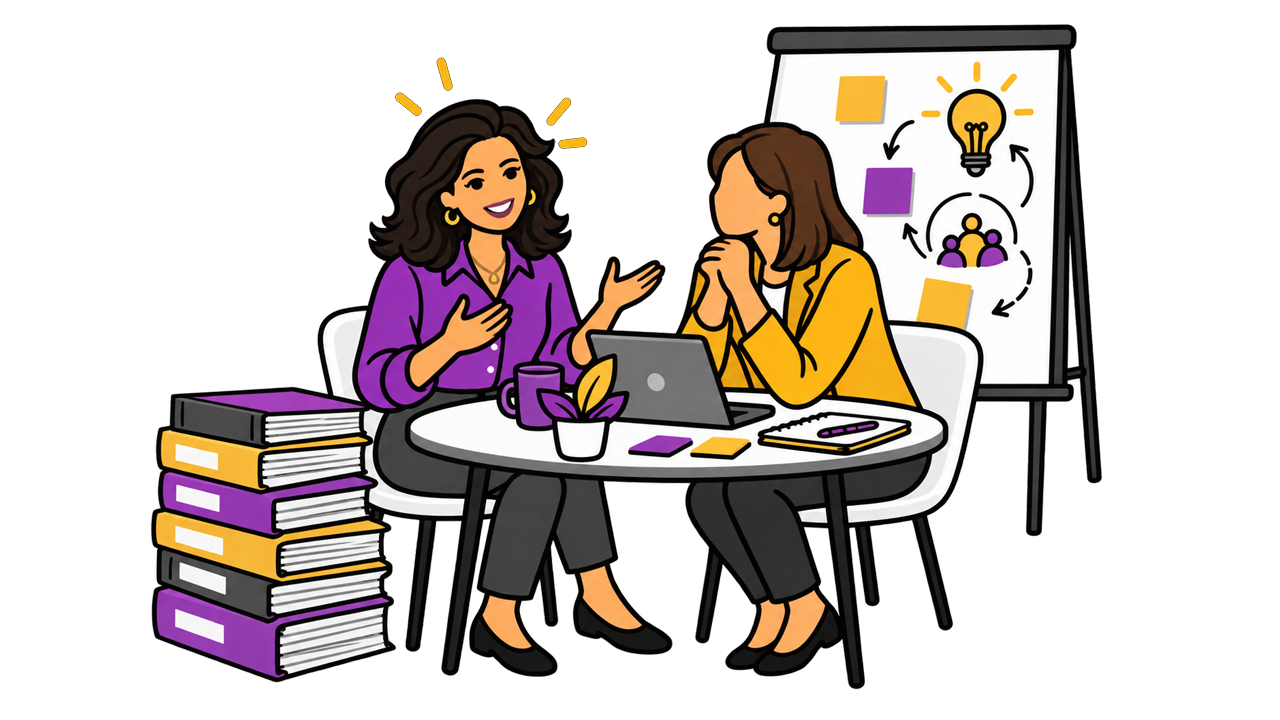
I tend to focus on getting things done, so I usually got pulled into important projects to execute. That was my What. But she saw me as more than someone who executes. She would bounce ideas and concepts off of me, because she valued how I saw and thought about things. She understood that when I pointed out "gotchas," I wasn't being negative or critical. I was being informational - pointing out where to be cautious. She valued my How. And she understood my Why, maybe even before I did.
Has anyone ever seen you that way - for how you think or why you care, not just for what you get done? That's what it means to be valued for more than your What. And you don't have to wait for someone else to see it. You can learn to see it in yourself.
Now let's turn to you, starting with your What - the part you can see.
Your What isn't your job title. It's the actual activities you do day to day - at work (or even in other parts of your life). You have Whats at home, with family and friends, in your community, and in the things you do for fun.
Your turn: find your What
Here are a few questions to get your thoughts flowing:
- Walk through a typical day or week. What are you actually doing? Meetings, emails, building, fixing, teaching, caring for someone, cooking, planning?
- What do people come to you for? Think about work, and also friends and family. Are you the one who plans the trip, fixes the problem, settles the disagreement, or listens when someone needs to talk?
- What do you do outside of work? Hobbies, volunteering, projects at home, the things you make time for even when you're busy.
Jot down whatever comes to mind. It doesn't need to be complete or polished. A rough list is enough.
Now look at your list. Which of those activities could AI help with? Maybe drafting an email, researching a topic, organizing information, or planning a schedule. Then look at the rest. Which ones depend on how you do them? Think about the way you listen, the questions you ask, the care you take, or the judgment you bring. Which ones would turn out differently if someone else did them?
You'll likely find that AI could help with some of your Whats. That's OK. But look closer, even at those. The activity itself is only part of the picture. Two people can plan the same trip, solve the same problem, or settle the same disagreement, and get completely different results. What makes the difference is how each of them goes about it, and why it matters to them. That's where so much of your value lives, and that's where we're going next.
AI may help with more and more of your What. But how you do it, and why, is still yours.
Find your How
Now that you have a list of some of your Whats, let's look underneath them. Remember, your How is the way you naturally go about what you do. Two people can do the exact same task and approach it in completely different ways.
Here's the tricky part. Your How can be hard to see. Because it comes so naturally to you, you may not even notice it. You might assume everyone does things the way you do. They don't.
That's where your CliftonStrengths results can help. The assessment gives you language for patterns you may have never put into words. It identifies your predominant Talent Themes, and Gallup is very specific about what those terms mean:
CliftonStrengths Vocabulary
Talent: a naturally recurring pattern of thought, feeling, or behavior that can be productively applied
Talent Theme: a category of Talents (a grouping of similar Talents)
Your results describe how you naturally think, feel, and behave. That's your How, in words. And those words are remarkably specific to you. There are 34 Talent Themes, and according to Gallup, the odds of someone else having the same Top 5 combination as you, in the same order, are 1-in-33.4 million.
But your results are a starting point, not the full answer. Knowing the names of your Talent Themes isn't the same as knowing how they show up in your life. So when I help a client explore their How, I start with their real life.
Here's an example from my own results. Connectedness® is my number one Talent Theme. For me, it shows up as seeing how things link together. I rarely see anything as a coincidence. So I'm always paying attention to how the different parts of someone's life connect. Something that seems small in one area can totally be affecting another part they never even consciously considered.
Here's what that looked like with one client. He was incredibly successful in business, with great friends and a good family. But he kept being triggered by how his partner did things, especially with their children. Why was this one relationship different? My stillness and simple reflecting allowed him to see within himself what he was bringing to it: his fears and unhealthy patterns, instead of leading with the same Strengths that helped him in other parts of his life.
That's my How at work: seeing the connections, and being still enough for someone else to see them too. Another coach might have looked at that relationship on its own, apart from the rest of his life. That's not wrong. It's just not my How.
His story shows something else too. His Strengths hadn't disappeared. He just wasn't intentionally using them in that one relationship. Your How shows up across your whole life, not only at work. So if something feels off in one area, ask yourself: Are my Talents leading here, or is something else, like fear or old habits, getting in the way? (Different situations can call on different Talents. The question is whether your Talents are leading at all.)
Now it's your turn. Go back to your list of Whats and pick one activity, ideally one you enjoy. Here are just some of the types of questions I ask. Walk through them with your activity in mind. Take your time. Don't overthink it.
Your turn: find your How
- What do you do? Give me a specific example.
- What are you focused on while you're doing that activity?
- How do you know that activity is done? For example: When it's complete? When it's the best it can be? When it's done the fastest? When it's the best quality? When it made someone else happy?
- What's important to you about that activity?
- If you imagined someone else doing the same thing, would they do it the same way? If not, what's different about how you do it?
Your answers are clues to your Hows and Whys. Some questions point more to your How (what you focus on, and how you go about it). Others point more to your Why (what's important to you).
Notice that none of them ask about your results directly. They ask about you. That's on purpose. The same Talent Theme can look very different from one person to the next, so your answers show you what your Talents look like in your life.
If you have your results, look at your Top 5 (or 10). Where do you see them in your answers? How might they be influencing your How?
If you don't have your results, that's OK. Your answers are still clues. You're already starting to put words to your How.
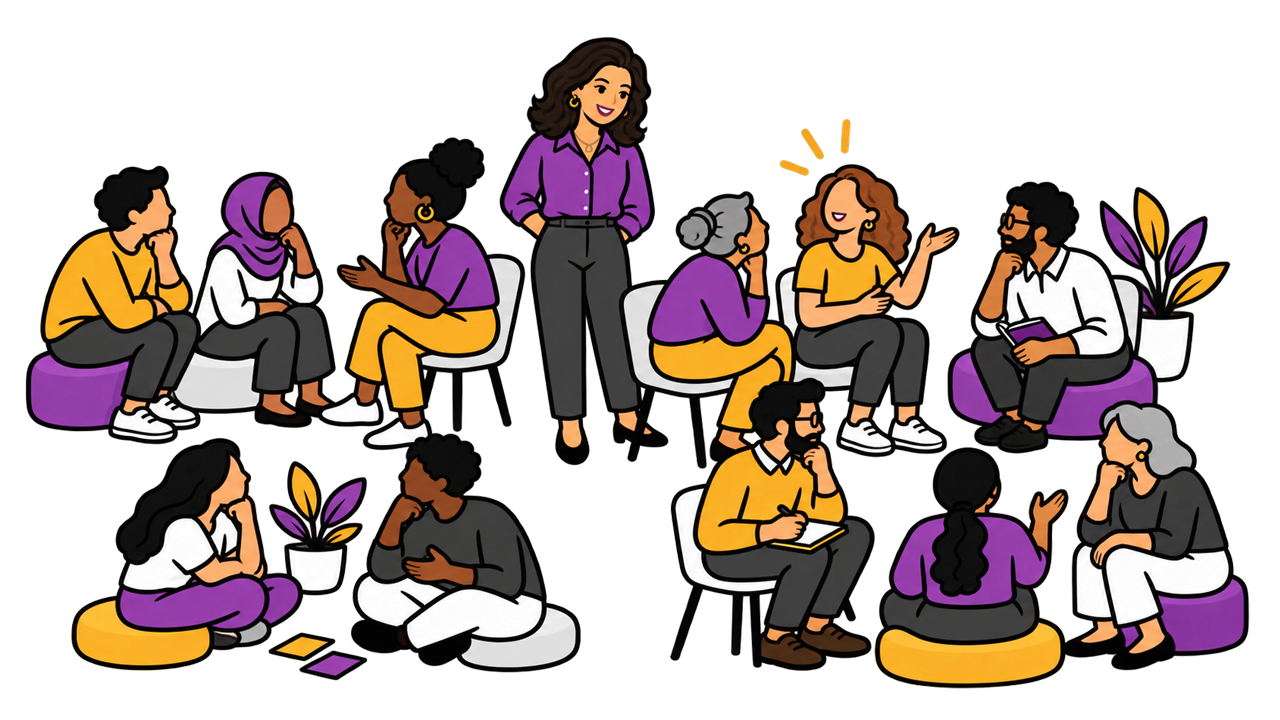
Seeing your How for the first time can be a quiet moment, or an exciting one. I see both in my workshops. As I walk around the room during group activities, you can see it in people's faces. Some are pensive, processing. Then there's a shift in how they're sitting, and a smile - like an inner knowing. Others can't wait to share what they discovered. Either way, once people make that shift, they engage more. There's a little extra energy in how they show up in the world. And it starts with the same kinds of questions you just answered.
Your results can help give you language for your How. Your everyday life is where you see it in action.
Find your Why
You've started to put words to your How. Now let's look at the reason behind it: your Why. It's what drives you - your values, your beliefs, and what matters most to you.
Your Why runs underneath everything you do, so automatically that you don't even notice it's there. That's what makes it harder to find than your How. You can watch your How in action. Your Why tends to show up as a feeling.
And for many people, finding it doesn't happen in a single moment. Life keeps giving you hints. Sometimes something lights you up, and you can't quite explain why. Other times, it's a lack of something: less excitement, less energy, less enthusiasm. You find yourself going through the motions, no longer willing to do what you used to. When you're busy keeping up with your day-to-day, those hints are easy to ignore, especially when they don't fit the life you're trying to maintain.
That's what happened to me. I spent the first decades of my life doing what was expected of me (and to the benefit of others). I enjoyed a lot of it, but it didn't fulfill me. Eventually, I was just disengaged. I dreaded every phone call, every email, every person who walked into my office. I had this constant "What now?" feeling.
That's not me. I'm the person who brings energy, commitment, quality, and pride to what I do. I still cared about quality, because that's who I am. But the energy, commitment, and pride weren't there. I didn't want to move up (or over) into another role. Yet I didn't want to be where I was either. For a person like me (who genuinely cares about contributing), having no energy or desire to give is a very bad thing.
Looking back, the hints had been there for years. I'd already done some job-hunting, but the role I was offered fell through. Then my own company reorganized, and a new role kept me distracted for a few more years.
By the time I took the CliftonStrengths assessment for the third time, I had left my career, and my Dad was sick (with cancer). Some of my results had changed. Achiever® had dropped to my number 9 Talent Theme, and Belief®, Responsibility®, and Adaptability® were now in my Top 5. Life and age had changed my priorities. My new results explained why I'd left my career - the change had happened in me before I ever saw it in my results.
My Why comes from that experience. I do what I do because I want to spare others that same heartache. Instead, I want them to feel and see what my Connectedness lets me see: the possibility within them, and the possibilities open to them.
My story isn't an uncommon one. I've worked with many people who've reached a similar point. It's not always about being in the same role for a long time. Often, they've reached a point where they're past the titles and achievements, and their focus has expanded from work to their whole life.
Stories like these are made of small realizations that build up over time. Realizing what lights you up. Admitting what drains you. And noticing the uneven balance you've allowed in your own life, because you think you have no other choice.
But you do.
Your story will look different from mine. No one else has gone through what you have, the way you have. Your experiences shape what you value and what you believe. And your Talents shape how you experience things in the first place. That's part of what makes your Why so uniquely yours.
And your CliftonStrengths results can help here too. Your Talent Themes influence what you need and what you value, so your results can help point you to your Why, as well as your How. (For me, seeing Belief and Responsibility move into my Top 5 was a big clue.)
So how do you start finding your Why? Pay attention to the hints. Then go back to the same activity you picked for your How, and go one layer deeper.
Your turn: find your Why
- What's most important to you about how it turns out?
- Does it light you up, or drain you? What about it does that?
- What would bother you if it were done differently (for example, done poorly)?
- What experiences in your life have shaped why this matters to you?
- Looking at your life more broadly, what's the balance between what lights you up and what drains you?
Your answers might point to things like accuracy, fairness, freedom, beauty, learning, efficiency, harmony, tradition, or making a difference. There's no right answer, and no Why is better than another.
Identifying your Why may take time, so keep noticing even beyond this exercise. Hint: It's often easier in the moments when something feels deeply right, or deeply wrong.
Your Why likely comes from your own life experiences. No one can define it for you.
Your Hows and Whys aren't tied to your What
Once you start naming your Hows and Whys, you'll start noticing them everywhere - in a meeting at work, in a conversation with a friend, even in how you plan a weekend. They're not tied to a single job, or even just work. And they stay with you even if things change - whether the change comes from AI, a reorganization, or your own growth.
I've seen this in my own life. My career has taken me through three very different Whats: engineering, Product Management, and now Strengths-based development.
Engineering may sound like a field that's all about solving technical problems. But even in engineering, I had to share ideas, explain concepts, and work with others. I've always been focused on the other person. Whenever I presented something, I thought about how to make it clear to as many people as possible, whatever their background.
That carried into my Product Management career. I worked with people in different roles, at different levels, and in different geographies. I was constantly thinking about how to create clear content that people from all those backgrounds could easily understand. And my Responsibility Talent Theme made me take that very seriously.
Now I do the same thing with CliftonStrengths. The difference is that I'm not promoting a piece of hardware or software. I'm focused on the people who benefit from what I do, and what they carry with them for the rest of their lives.
I've always cared about the people I work with. In my earlier roles, they were a priority to me as a person, but they weren't a priority for my role. Now, the work I do is aligned with my own values and priorities. The want to do this work comes from inside me, not from a job title or a job description.
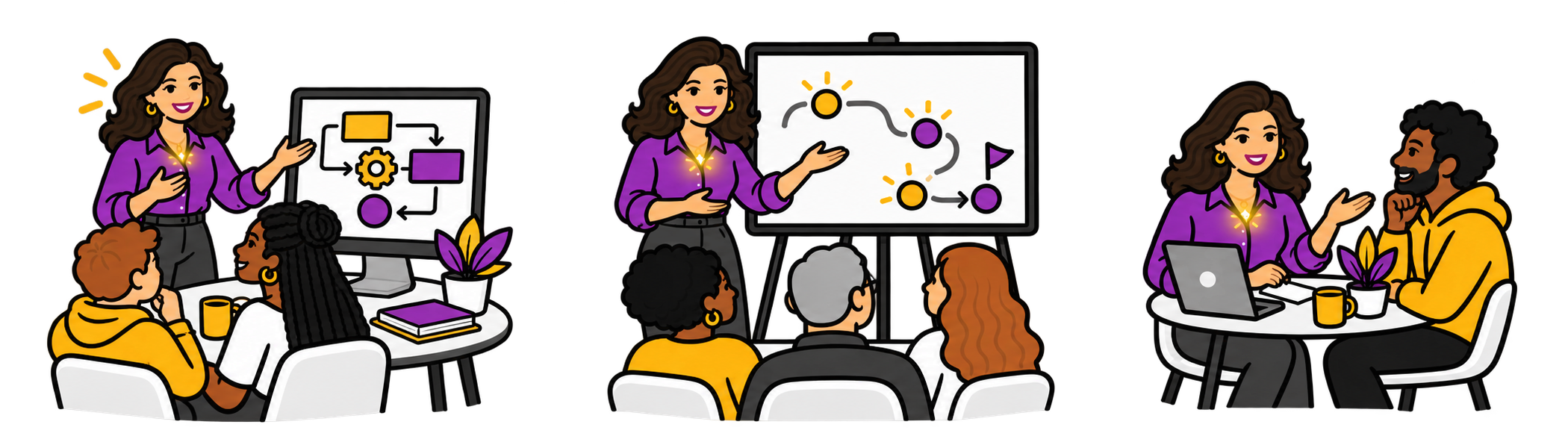
Three very different Whats. The same How. And in my work now, my Why finally gets to lead too.
Even in my most disengaged years, I still cared about quality. My How never left. My Why just didn't have room to lead.
You don't have to wait for a big change to put yours to use. Once you know your Hows and Whys, you can bring them into what you're already doing - on purpose.
I've watched students do exactly that. For several years, I worked with groups of students at one university. Some came back year after year, and from their questions and stories, it was clear they were using what they learned throughout the year. One student still stands out to me. Over time, she carried herself differently. She dressed differently. She had a confidence about her, as if her value had really sunk in. And I was amused when, the last time I saw her, she asked if her Dad could work with me.
She was still a student. Her What hadn't changed. But she knew her How and her Why, and she brought them with her - even home.
Your What can change. Your How and your Why are yours to keep, no matter what you do.
What about asking AI to explain your results?
By now, you may be wondering: Why not just ask AI? You can type in your Top 5 and get a description of your results in seconds.
It's a fair question. Should you ask? I wouldn't say should. I'd say you could. There's nothing wrong with asking a question. Just know what you're getting. (I talk about what AI does, and why it leans towards typical, in Why Your Individuality Matters More Because of AI.)
Before you ask AI about your results
- It's likely not an expert in CliftonStrengths terms. It may not accurately describe what Gallup means by its terms. But it'll sound confident, and that can mislead you.
- It doesn't know you - your experiences, your circumstances, your beliefs - to use in context.
- It leans towards typical responses. It pulls from what it's concluded is typical, based on everything it learned from. But typical isn't relevant to you, the Individual, and your specific experience.
- It's limited by what you tell it. It can't read your tone or your body language. It takes your words at face value. And it doesn't know how or where to prod deeper.
Put those together, and your blind spots become its blind spots. You don't get the insight you deserve, and you won't even be aware that you're not getting it.
Could you use it? Sure. But it's up to you to challenge what it tells you. Be discerning. At a minimum, you'll need to ask it for a different perspective. Are your prompts generic? Or are they worded for what you need to hear?
Remember my client? What helped him wasn't an answer. It was the space to see it for himself. And remember my manager? She understood my Why, maybe even before I did. That kind of insight requires listening, and sometimes a second person to draw us out of our blind spots.
Gallup does have its own AI assistant, Gallup AI, built on its research. It's only available to those with a Gallup Access subscription, so chances are you may not have access to it.
As with all things, you can get value from AI. But don't limit yourself to what it tells you. Your results aren't only something to read about. You have to experience them. Explore. Learn. Discover.
AI can help you reflect. It can't replace your first-hand experience of exploring how your results show up in your life.
Where do you go from here?
You've now looked at your What, started exploring your How and your Why, and seen where AI fits in. So what's next?
Keep exploring your own Hows and Whys, even if it's only a start. Continue to think about specific activities or tasks, especially ones you enjoy. What do they have in common? What's important to you about them? What's different about how you approach them compared to others? What lights you up, and what drains you?
You don't need all the answers right away. Let it marinate. And make it a habit, not a one-time exercise. Keep paying attention to the hints. The more you notice, the easier it gets, and the clearer your Hows and Whys become. Over time, that clarity helps you recognize where you fit best, now and as things change.
If you'd like help, consider exploring the CliftonStrengths assessment. Your results can give you language for what you're starting to notice. (Not sure if it's right for you? See the FAQ below.)
Remember the question you came in with? If AI can do more of what I do, what does that mean for me?
It means your What may change. But AI can't take your How or your Why - the way you naturally go about things, and what drives you. And the more AI can do, the more those set you apart. When you know them, you don't have to make decisions in survival mode. You can make them from who you are.
I'm hopeful about this time, and here's why. The people I work with are proactive. (You don't seek out this kind of work if you feel passive or helpless.) Their eyes are open. They may have doubts and insecurities, and that's OK. They also know there's something about their wiring that's unique, special, and not yet fully tapped. That's exactly what differentiates them from AI.
This isn't a competition with AI. Competitions often have losers. The better question is: How can you use what you have, in its best light, in this time of change?
You were never only what you do.
To learn why AI makes your Individuality matter more, read Why Your Individuality Matters More Because of AI. And if you'd like support exploring your own results, see how I work with individuals.
Frequently asked questions
What makes you valuable when AI can do so much?
Your value was never only in what you do. AI can take on more and more of your What: the tasks and activities you do. But your How (the way you naturally go about things) and your Why (what drives you - your values, your beliefs, what matters to you) are uniquely yours, shaped by your own experiences. Your CliftonStrengths results can help you name your How and point you to your Why. Your How and your Why are yours to take with you, no matter what you do.
What is CliftonStrengths?
CliftonStrengths (formerly StrengthsFinder) is an assessment from Gallup that helps you discover your natural patterns of thinking, feeling, and behaving that can be productively applied. Your results identify your predominant Talent Themes, out of 34. More than 38 million people have taken it. For me, its real value is the language it gives you: specific words you can respond to, so you can take what fits, question what doesn't, and start putting your How into words.
Should I take the CliftonStrengths assessment?
If you're genuinely curious, yes - and be prepared to do some work. CliftonStrengths (formerly StrengthsFinder) isn't a free or a simple test. It's a paid assessment from Gallup, and getting real value out of your results takes work. If you're not going to do anything with your results, there's no point in taking it. But if you're curious enough to take it, I encourage you to. It's an incredibly powerful tool that can reveal a lot of insight about you that you can use again and again.
Can AI explain my CliftonStrengths results?
It can try, and it may be a start, but know what you're getting. A general AI tool may not describe Gallup's terms accurately, and it doesn't know your experiences, your circumstances, or your beliefs. It's limited to what you tell it, so your blind spots become its blind spots. Gallup offers its own assistant, Gallup AI, but it's only available to those with a Gallup Access subscription. Whatever you use, challenge what AI tells you, and explore your results in your own life.
Will my Hows and Whys still matter if my job changes?
Yes. Your What may change, but your How and your Why go with you. They're part of who you are, not part of a job description. You can use them where you are now, and they carry over into a new role, a new career, and the rest of your life.